A hit and run shatters the rhythm of a normal day. In a blink, you are dealing with shock, a damaged vehicle, and a vanishing taillight that holds the key to responsibility. The law gives you tools, but the earliest minutes matter. Over the years, I have handled cases where quick thinking by a rattled driver multiplied the available evidence, and others where hesitation allowed crucial details to slip away. The difference often shows up in the claim’s value and the timeline to resolution.
This guide lays out a practical, field-tested plan for drivers in El Dorado Hills and neighboring communities who face the gut punch of a fleeing driver. It blends legal strategy with common sense, anchored in how insurers, investigators, and courts actually operate. If you remember only one theme, let it be this: preserve safety first, preserve evidence second, and preserve options with a disciplined approach to reporting and follow-up. An experienced EDH car accident attorney or car accident lawyer can then build on that foundation.
Safety First, Then the Record
After impact, many people act on instinct. Some chase. Some freeze. The strongest move is usually the least dramatic: bring your car to a safe stop, hazard lights on, and breathe. Adrenaline distorts time and memory. A few slow breaths sharpen both.
Once you are out of immediate danger, start capturing the scene with the tools you already have. Your phone’s camera and voice recorder are invaluable. Speak out loud into a voice memo. Describe what just happened, which lane you were in, any landmarks, cross streets, the direction the other driver fled, and whatever you can recall about their vehicle. Even if your details feel messy, that raw, time-stamped recording can later refresh your memory with surprising accuracy. I know officers and adjusters who put weight on those early statements when they align with later evidence.
If your body hurts, do not brush it off. Soft tissue injuries and concussions often hide behind adrenaline. If you feel dizzy, nauseated, or disoriented, stay seated, avoid sudden movements, and ask a bystander to call 911. Your health sits above every tactical consideration. Paramedics will also create records that matter for both medical care and claims.
The Brief Checklist That Saves Claims
Use this short sequence if you can do so without putting yourself in danger. You are not trying to play detective. You are freezing a moment in time that would otherwise evaporate.
- Photograph everything you safely can: your vehicle, the roadway, debris, skid marks, weather, traffic lights, and any damage to nearby property like curbs or signs. Take wide shots to show context, then close-ups with a common object (a key, a coin) for scale. Snap or record any details of the fleeing car: color, make, model, approximate year range, unique features like bumper stickers, roof racks, tinted windows, rims, or dents. A partial plate helps, even two characters. Ask bystanders for what they saw, and capture their names and phone numbers with consent. If they are comfortable, a short voice recording of their account is often more accurate than a written note. Note cameras: doorbell cameras, dash cams, traffic intersection cameras, and business security cameras. Two hours later, video may be overwritten. In some stores, footage cycles in 24 to 72 hours.
This is one of only two lists in this article. Commit it to memory, or keep it in your glove box.
Do Not Pursue the Fleeing Driver
Chasing feels righteous. It is also legally risky, physically dangerous, and usually unproductive. I have seen clients rear-end uninvolved drivers while trying to catch a plate number, turning one claim into two and weakening their position. In California, your duty is to remain at the scene, report the crash, and render reasonable aid. If you leave the scene and something else goes wrong, you can complicate your own liability exposure.
There is a narrow exception: if the other driver stops briefly nearby and you can safely roll forward to remain in visual proximity without speeding, weaving, or ignoring signals, you can do so while staying on the phone with 911. The dispatcher’s recording will reflect that you were seeking police assistance, not engaging. When in doubt, default to staying put and documenting.
Call Law Enforcement, Even for “Minor” Damage
Many drivers skip police involvement if they think the damage looks minor. That decision often comes back to haunt them, especially when the other driver is gone. A police report establishes timing, location, witnesses, and basic facts that insurers treat as objective. In hit and run crashes, officers sometimes canvas nearby streets or call in plate details if you caught part of a number. They may also note telltale transfer paint colors and debris that help later.
If response times are long and you need to leave, ask dispatch for an incident number and instructions on where to file a counter report. In California, you typically must report collisions with injury or significant property damage. Always exchange information when you can, but in a hit and run, the report may stand in for that.
For El Dorado County residents, CHP or the El Dorado County Sheriff’s Office often handles roadway incidents outside town limits, while in-town collisions may involve local agencies. Do not overthink the jurisdiction in the moment. Call 911 if there are injuries or hazards, otherwise use the non-emergency line and follow their direction.
Medical Evaluation: The Evidence You Wear
Delayed-onset symptoms are common. Whiplash may peak 24 to 72 hours post-crash, and mild traumatic brain injuries can masquerade as fatigue, irritability, or brain fog. I have had clients who felt “fine” at the scene, skipped urgent care, then struggled to link later symptoms to the crash because there was no early record. An insurer will argue that the gap implies a different cause.
Seek an evaluation the same day if possible, even if it is only at urgent care. Tell the provider that you were in a motor vehicle collision with a fleeing driver. That phrasing matters, because it encourages careful documentation of mechanism of injury and any concern for head or spine trauma. Keep copies of discharge papers and referral notes. Photograph visible bruising or seat belt marks across the chest or abdomen over several days, since bruises can darken before they fade. These details fill gaps that a missing at-fault driver leaves behind.
The Insurance Layer: Uninsured Motorist Coverage in Practice
Most hit and run drivers fall under the uninsured motorist umbrella for insurance purposes. California policies typically address two key coverages: Uninsured Motorist Bodily Injury (UMBI) and Uninsured Motorist Property Damage (UMPD) or, more commonly, collision coverage for vehicle repairs. The details matter.
UMBI covers your injury claims when the at-fault driver is uninsured or unidentified. If your policy includes medical payments coverage, that can pay some bills early, regardless of fault, and without affecting your premium in most cases. For the car itself, UMPD may require contact with the at-fault vehicle, not just a near miss that sent you into a guardrail. Some policies exclude UMPD if you already have collision, and collision often becomes the faster repair path with your deductible at stake.
One practical point that surprises people: your own insurer becomes your adversary, in a limited sense, once you present a claim under UMBI. They step into the shoes of the missing driver, which means they will test causation, medical necessity, and damages just as the other side would. Keep communication precise and factual. Provide the police report, photos, medical records, and proof of out-of-pocket costs. Avoid guessing on recorded statements. If you do not know the speed, say you do not know. An EDH car accident attorney can handle that dialogue, reducing room for misinterpretation.
Timelines and Notice Requirements
Policies include prompt notice requirements. Report the crash to your insurer as soon as https://maps.app.goo.gl/TsAEsRWPUthwU4ow7 you are medically able. A short notice call creates a claim number and helps preserve coverage rights. If you delay, your insurer may argue prejudice, especially if late notice prevented them from inspecting damage or contacting witnesses.
California has a two-year statute of limitations for personal injury in most cases, but uninsured motorist claims can carry additional contractual deadlines. Some policies require arbitration demands within a defined window. Do not rely on general internet timelines. Ask your insurer for written confirmation of relevant deadlines for UM and med-pay claims, or let your attorney manage that calendar.
Finding the Driver Who Fled
Not every hit and run remains a mystery. Over time, I have seen cases cracked by a sliver of a plate number and a unique roof rack, a paint color limited to a two-year model run, a side mirror found in the roadway with a part number, or doorbell footage from a house two blocks away that caught the car minutes before impact. Sometimes a body shop tips off an investigator when an unusual damage pattern matches the report. These successes are not luck alone. They start with disciplined early documentation, a police report, and timely preservation of video.
In suburban areas around El Dorado Hills, commercial corridors often have cameras mounted high, with fields of view that catch approach angles, not just storefronts. If the crash happens near an intersection like Serrano Parkway and El Dorado Hills Boulevard, traffic signal cameras may not store footage for public access. Still, adjacent businesses often do. A courteous in-person request soon after the crash can work better than a phone call. If you are shaken or injured, ask a friend or your attorney’s office to help. Some providers will only release footage to law enforcement or upon subpoena, which is another reason to file a police report without delay.
Dealing With Property Damage While the Driver Is Unknown
Getting your car repaired without the at-fault driver’s information introduces trade-offs. If you use your collision coverage, you pay your deductible upfront, then your insurer may attempt subrogation if a driver is later identified. If successful, your deductible can be reimbursed. That later recovery is not guaranteed.
Rental coverage is often capped by per-day and total limits. A common range is 25 to 40 dollars per day for up to 20 to 30 days, though some policies vary. Body shops in the region may run three to five weeks on parts and labor for moderate damage, longer for specialty makes. Ask your adjuster to authorize supplements quickly and communicate directly with your chosen shop. Take photos when you drop the car off and when you pick it up, documenting repair quality.
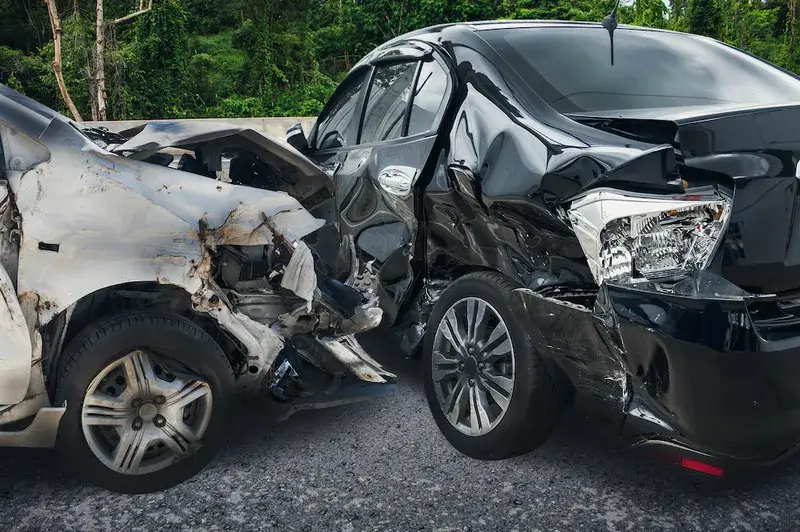
If the vehicle is a total loss, valuation will pivot on comparable sales within a defined radius, adjusted for mileage and condition. Refuse to accept a valuation that omits recent documented maintenance or undervalues options like safety packages or premium wheels. Provide receipts and listings of true comps. A seasoned car accident lawyer will often spot lowball comps or improper deductions fast.
The Human Side: Stress, Memory, and Credibility
Insurers pay attention to consistency. So do juries and arbitrators. Expect your memory to sharpen and shift as the shock wears off, but try to avoid speculative flourishes. If you are not sure whether the fleeing car was a late-model crossover or compact SUV, do not force a guess. Within a day, write a clean narrative for yourself that you can reference: time, location, lane position, traffic flow, weather, impact points, what you felt physically, what you heard, and how the other vehicle departed. That document is not for social media. Keep it private or share only with your attorney and treating providers as needed.
Stress complicates judgment. The “what if” loop is familiar to almost every hit and run client I have represented. They replay the seconds where they might have caught more detail. Give yourself a hard truth framed with grace: it is not your job to solve the hit and run on the spot. It is your job to stay safe and build a record that lets others help you later.
How Attorneys Actually Advance Hit and Run Claims
When people hear “hire an attorney,” they picture courtrooms. In hit and run cases, most of the heavy lifting happens before litigation. Here is how a practiced EDH car accident attorney typically adds value, beyond sending letters and quoting statutes.
- Evidence triage and preservation: immediate outreach to businesses with likely camera angles, formal preservation letters, requests to law enforcement for supplementary reports, and coordination with private investigators if the facts justify it. Medical mapping and causation: ensuring that your providers chart mechanism of injury, objective findings, and functional limitations, and that referrals to specialists are timely. Gaps in care are red flags for insurers and must be explained with documentation. Coverage analysis: reading your policy for UM, med-pay, collision, rental, towing, and any exclusions or offsets, then structuring the claim so the right coverages trigger in the right sequence. Damages modeling: documenting wage loss with employer statements and pay stubs, estimating diminished earning capacity when appropriate, calculating mileage and out-of-pocket costs accurately, and translating daily life limits into credible, not exaggerated, non-economic damages. Negotiation posture: managing recorded statements, challenging premature settlements, and setting the file up for arbitration or litigation if necessary, including expert selection when fault or biomechanics might be contested.
This is the second and final list in this article. It reflects what moves the needle when the at-fault driver is absent.
What If You Were Partly at Fault?
Not every hit and run involves a perfectly blameless victim. Maybe you were merging and failed to signal. Maybe you braked abruptly. California applies pure comparative fault. That means your compensation can be reduced by your percentage of fault, but it does not bar recovery. In UM cases, your own insurer will raise comparative fault if the facts support it. Do not hide from those details. Instead, contextualize them with roadway geometry, reaction times, and the fleeing driver’s duty to stay and render aid. An analysis rooted in physics and traffic norms goes further than moral arguments.
I worked a case where a client changed lanes within 100 feet of an intersection, something our Vehicle Code discourages but does not outright prohibit in every scenario. The other driver clipped the rear quarter, then bolted. We secured two witness statements and a dash cam clip from a rideshare driver that showed the fleeing car accelerating into the lane without checking a blind spot. Our client took a modest comparative fault allocation, but the UM carrier paid fairly on injuries. The difference came from sober evaluation, not wishful thinking.
Dash Cams, Telemetry, and Modern Evidence
If you run a dash cam, secure the footage immediately. Some devices overwrite within hours or a day. Copy the original file to multiple locations and keep the native format. If your vehicle supports telematics or a driving app that logs speed and braking events, preserve that data. Insurers sometimes request it, and while it can cut both ways, it often clarifies timing and severity. Fair warning: never edit or trim clips before providing them. Provide full context. Edits invite accusations of cherry-picking.
For bicyclists or pedestrians struck in a hit and run, smartwatches occasionally record abrupt deceleration data and even fall detection alerts. Those time stamps can align with 911 records when the collision’s timing is contested.
Criminal Case vs. Civil Recovery
If law enforcement identifies the fleeing driver and files charges, you will likely be a witness, not a party. The criminal process focuses on guilt and punishment, not your monetary recovery. You might receive restitution, but it is often limited and slow. Your civil claim, whether against the driver’s insurer or your UM coverage, remains the main financial path. Do not delay civil action while waiting on a criminal outcome. Coordinate, but do not tether your timeline to the prosecutor’s calendar.
If the driver is ultimately found uninsured or underinsured, your UM and Underinsured Motorist (UIM) coverages switch on, subject to policy limits. Stacking opportunities are narrow in California, and the specifics of offsets can be counterintuitive. An attorney can map the maximum recoverable amount across medical pay, UM/UIM, and any third-party contributions.
Social Media, Statements, and the One Audience That Matters
Resist the urge to post crash photos or rants. An adjuster who is deciding whether your back pain justifies a series of physical therapy sessions does not need to see you smiling at a barbecue two days later, even if you were gritting your teeth through the afternoon. Context rarely survives screenshots. Keep your updates private and focused on the people who are actually helping: your medical providers, your insurer’s assigned contacts, your chosen car accident lawyer, and any investigators.
When giving a statement to your insurer, ask if it is required and under what part of the policy. You have a duty to cooperate, but you can insist on a reasonable time, avoid guessing, and request a copy of the recording or transcript. If English is not your first language, ask for an interpreter. Accuracy outruns speed.
When the Case Is Worth More Than It Looks
Not all injuries show up cleanly on X-rays. Persistent headaches, sleep disruption, and neck and shoulder pain can alter how you work and interact with family. If your job involves lifting or sustained focus, even mild post-concussive symptoms have real value in a claim. The key is linking symptoms to the crash with consistent medical documentation, then explaining functional impact in concrete terms. “I can no longer play 18 holes” is less persuasive than “I can no longer lift 30-pound inventory bins without numbness in my right hand, which means my coworkers have to cover my closing shift tasks three nights a week.”
A methodical EDH car accident attorney will translate those daily-life disruptions into a demand package that reads like a story supported by records, not a wish list. That difference yields better offers.
The Long Tail: Follow-Up and Resolution
Most UM injury claims resolve within four to twelve months, depending on medical treatment length and any disputes. Property damage usually closes earlier. Arbitration may add several months. Litigation stretches longer, but many carriers prefer to avoid a courtroom for UM disputes. Patience helps, but so does pressure applied with documentation. Weekly calls accomplish less than a well-organized submission with every bill, record, image, and wage statement in place.
When settlement offers arrive, weigh them against both your medical trajectory and known uncertainties. If your doctor anticipates a plateau rather than a cure, that honest assessment belongs in the file before you settle. If an MRI is pending, pause. One client accepted an early offer, then learned he had a small rotator cuff tear needing surgery. The release foreclosed further recovery. A measured approach protects you from that outcome.
A Local Note for EDH Drivers
El Dorado Hills roads combine suburban arteries with rural stretches, frequent elevation changes, and high-speed corridors like Highway 50 nearby. Hit and runs often occur at twilight when traffic thins just enough for a fleeing driver to gamble on escape. Neighborhood developments with HOA-managed cameras, school zones with crossing cameras, and shopping centers with wide-lot surveillance make early canvassing worthwhile. A local car accident lawyer familiar with these pockets can prioritize requests where footage tends to be retained longer or angles are historically helpful.

Ambulance transport patterns also matter. In this region, patients may be taken to Mercy or Sutter facilities depending on injury profile and availability. Knowing where records will originate speeds the process later.
If You Remember Nothing Else
Safety first. Document quickly. Report promptly. Seek medical evaluation early. Preserve video and witness contacts. Coordinate smartly with your insurer. Bring in an attorney when injuries are more than superficial, when there is a dispute, or when you want to maximize the leverage that careful timing and evidence provide.
A hit and run throws you into a game you did not choose to play. The rules, however, are not mysterious. With a calm plan and disciplined follow-through, you can turn a chaotic moment into a well-supported claim, even if the other driver never steps forward. An experienced EDH car accident attorney will meet you where you are, fill the gaps you could not reasonably handle at the scene, and drive the matter toward fair compensation while you focus on healing.